
Knee Pain When Walking: What’s Causing It and How to Treat It Without Surgery

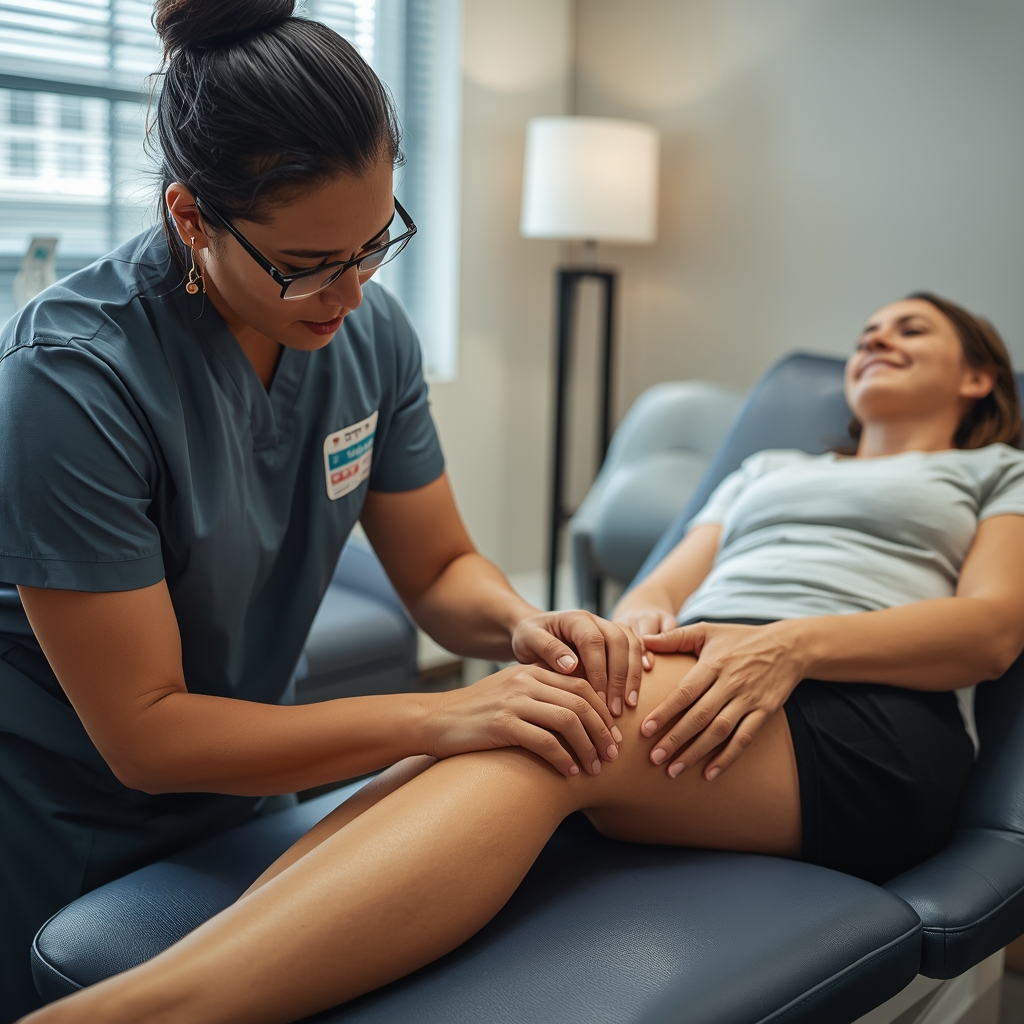
Evaluation of knee pain

What You’ll Learn in This Article

  • Why knee pain often shows up during walking, stairs, or standing from a chair
  • The most common causes of knee pain, including tendon, joint, and movement issues
  • Why rest and medication alone often fail to fix knee pain
  • How chiropractic care improves knee mechanics and movement patterns
  • How shockwave therapy supports healing in chronic knee conditions
  • When to seek care to avoid long-term knee problems

Knee Pain Is One of the Most Common Reasons People Stop Being Active

Knee pain has a way of quietly changing daily life. At first, it may only hurt when walking uphill, climbing stairs, or getting up from a chair. Over time, that discomfort can turn into stiffness, swelling, or sharp pain that makes people hesitant to move at all.

At Vector Spine and Sport in Murray, Utah, we frequently see knee pain in people who want to stay active — walkers, runners, pickleball players, gym-goers, and even those who simply want to move comfortably through their day. One of the most important things patients learn is that knee pain is rarely just a “knee problem.”


Common Causes of Knee Pain When Walking

The knee is a load-bearing joint that depends on proper movement from the hip, ankle, and foot. When those areas aren’t functioning well, stress is transferred directly to the knee.

Some of the most common causes of knee pain we see include patellar tendinopathy, quadriceps tendon irritation, meniscal strain, early joint degeneration, muscle imbalance, and poor movement mechanics. Overuse, improper footwear, weak hip muscles, or altered walking patterns can all contribute.

In many cases, knee pain develops gradually rather than from a single injury, which makes it easy to ignore — until it starts limiting activity.


Why Knee Pain Often Becomes Chronic

Many people try to manage knee pain with rest, ice, braces, or anti-inflammatory medications. While these approaches may help temporarily, they often fail to address why the knee is being overloaded in the first place.

Without correcting joint motion, muscle balance, and movement patterns, tissues don’t heal optimally. Tendons receive limited blood supply, making chronic knee conditions especially stubborn once degeneration begins. Over time, pain can persist even after activity levels are reduced.


How Chiropractic Care Supports Knee Health

Chiropractic care is not just about the spine — it’s about improving how the entire body moves. At Vector Spine and Sport, Dr. Jacob Reesor evaluates how the hip, knee, ankle, and spine work together during walking and activity.

Restricted motion in the hip or ankle can increase stress on the knee with every step. Gentle chiropractic adjustments help restore normal joint mechanics, improve alignment, and reduce compensatory movement patterns that overload the knee.

When movement efficiency improves, many patients notice reduced pain, better stability, and increased confidence with daily activities.


Shockwave Therapy for Chronic Knee Pain

For knee pain that has lingered for months or keeps returning, Shockwave Therapy (EPAT) can be a highly effective option. Shockwave therapy uses acoustic sound waves to stimulate blood flow, promote tissue repair, and break down scar tissue in irritated tendons and surrounding structures.

Clinical research supports shockwave therapy for conditions such as patellar tendinopathy and chronic knee pain, showing improvements in pain and function compared to conservative care alone. Because shockwave therapy targets tissue healing rather than masking symptoms, results are often longer-lasting.

At Vector Spine and Sport, we use both focused and radial shockwave therapy, allowing treatment to be customized based on the depth and location of the problem.


Knee Pain After a Car Accident

Knee pain can also appear after a car accident, even if it wasn’t immediately noticeable. Impact with the dashboard, bracing during the collision, or altered walking patterns during recovery can strain knee structures.

In Utah, chiropractic care for auto injuries is typically covered under Personal Injury Protection (PIP) insurance, often with no out-of-pocket cost. Early evaluation helps prevent minor knee injuries from turning into long-term limitations.


When to Get Your Knee Evaluated

If knee pain has lasted more than a few weeks, worsens with walking or stairs, or limits your ability to stay active, it’s time to seek care. Early, conservative treatment leads to better outcomes and helps many patients avoid injections or surgery.


Helping the Murray Community Keep Moving

At Vector Spine and Sport, our goal is to help you move better, stay active, and enjoy life without knee pain holding you back. Effective, evidence-based treatment options are available — and you don’t have to navigate them alone.

📍 Vector Spine and Sport — Murray, Utah
📞 801-456-0352

Shoulder Pain: Why It Happens and How to Treat It Without Surgery

Shoulder pain treatment

What You’ll Learn in This Article

  • What causes shoulder pain and why it often doesn’t resolve on its own
  • Common shoulder conditions like rotator cuff irritation, bursitis, and tendonitis
  • Why rest and medication may not be enough for lasting relief
  • How chiropractic care restores shoulder and neck biomechanics
  • How shockwave therapy helps stimulate healing in chronic shoulder injuries
  • When to seek care and how early treatment improves outcomes

Shoulder Pain Is More Than Just a Shoulder Problem

Shoulder pain has a way of sneaking into daily life. It might start as a mild ache when reaching overhead, lifting weights, or sleeping on your side. Over time, that ache can turn into sharp pain, weakness, limited motion, or even pain that radiates into the neck or arm.

At Vector Spine and Sport in Murray, Utah, we see shoulder pain in people of all activity levels — office workers, athletes, weekend warriors, and those recovering from auto accidents. One of the most important things patients learn is this: shoulder pain rarely exists in isolation. The shoulder depends heavily on proper movement of the neck, upper back, and surrounding muscles to function normally.


Common Causes of Shoulder Pain

The shoulder is one of the most mobile joints in the body, which also makes it vulnerable to injury and overuse. Some of the most common causes we see include rotator cuff irritation, shoulder bursitis, tendonitis, impingement, and muscular imbalance. These issues often develop gradually due to repetitive motion, poor posture, or weakness in supporting muscles.

Trauma such as a fall or car accident can also disrupt shoulder mechanics, leading to inflammation and reduced range of motion. Even sleeping positions and prolonged desk work can contribute by placing the shoulder in compromised positions for extended periods.


Why Shoulder Pain Often Becomes Chronic

Many patients try to “push through” shoulder pain, assuming it will resolve with time. Others rely on rest, ice, anti-inflammatory medications, or cortisone injections. While these approaches may temporarily reduce pain, they often fail to address the underlying issue — impaired movement, tissue degeneration, or poor biomechanics.

When shoulder tissues don’t receive adequate blood flow and mechanical stimulation, healing slows. Over time, tendon fibers can weaken, scar tissue can develop, and pain becomes persistent rather than occasional.


How Chiropractic Care Supports Shoulder Recovery

Chiropractic care plays a critical role in shoulder rehabilitation by addressing the areas that influence shoulder function — especially the neck and upper back. Restricted motion in these regions can change how the shoulder moves, increasing strain on tendons and muscles.

At Vector Spine and Sport, Dr. Jacob Reesor evaluates the entire kinetic chain, not just the painful area. Gentle, evidence-based chiropractic adjustments help restore proper joint motion, reduce compensatory patterns, and improve nerve communication. When the spine and shoulder move more efficiently, inflammation decreases and pain often improves naturally.

Patients frequently notice better mobility, reduced stiffness, and increased strength when the shoulder is no longer forced to compensate for surrounding dysfunction.


Shockwave Therapy: A Powerful Option for Shoulder Pain

For chronic or stubborn shoulder pain, Shockwave Therapy (EPAT) is one of the most effective non-surgical options available. Shockwave therapy uses acoustic sound waves to stimulate blood flow, promote cellular repair, and break down scar tissue within irritated tendons and muscles.

Clinical research supports shockwave therapy for shoulder conditions such as rotator cuff tendinopathy and calcific tendonitis. Studies published in journals like The American Journal of Sports Medicine and Clinical Orthopaedics and Related Research have shown improved pain and function compared to conservative care alone.

At Vector Spine and Sport, we use both focused and radial shockwave technology, allowing treatment to be tailored based on the depth and type of tissue involved. Sessions are quick, require no downtime, and are well tolerated by most patients.


Shoulder Pain After a Car Accident

Shoulder injuries are common after car accidents, even when pain isn’t immediate. Seatbelts, steering wheel impact, and sudden force transmission through the arms can all contribute to soft tissue injury. In Utah, chiropractic care for auto injuries is typically covered under Personal Injury Protection (PIP) insurance, meaning treatment is often provided with little to no out-of-pocket cost.

Early evaluation helps prevent minor shoulder injuries from turning into long-term problems.


When to Seek Care

If shoulder pain is limiting your ability to lift, reach, sleep comfortably, or exercise — or if pain has persisted longer than a few weeks — it’s time to be evaluated. Early, conservative treatment leads to better outcomes and helps many patients avoid injections or surgery altogether.


Helping the Murray Community Move Better

At Vector Spine and Sport, our goal is simple: help you move better, feel better, and get back to the activities you enjoy. Shoulder pain doesn’t have to control your life, and effective, evidence-based treatment options are available.

📍 Vector Spine and Sport — Murray, Utah
📞 801-456-0352